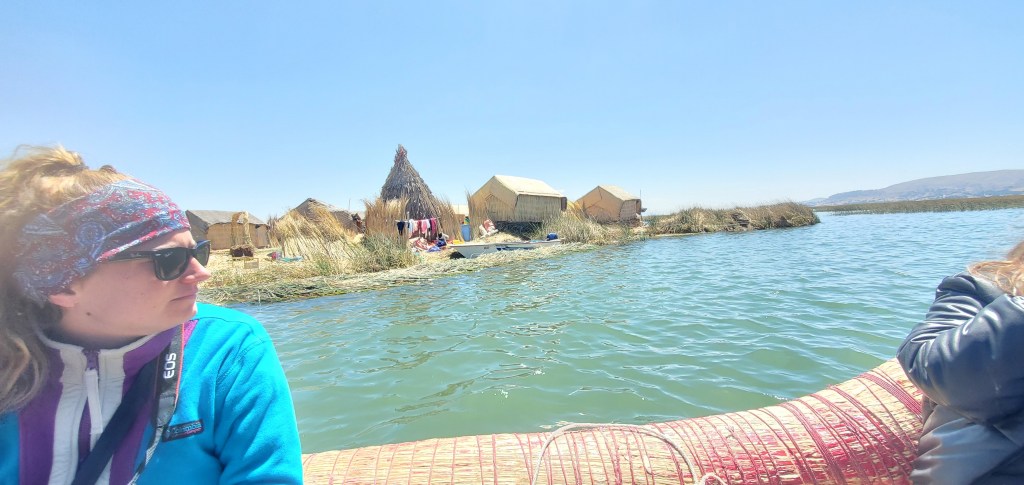
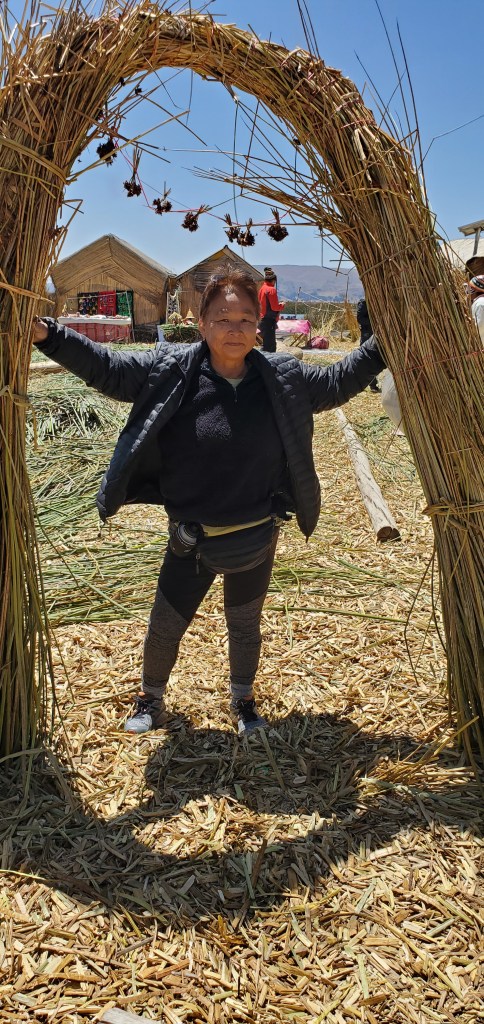
I had no real conception on how the islands on Lake Titicaca would be. The Uros Islands are floating islands made out of reeds. Every 20 days or so they need to replace some of the reeds. Only 5 or 6 families live on each island. There are over 100 floating islands on Lake Titicaca. We landed on one such island.
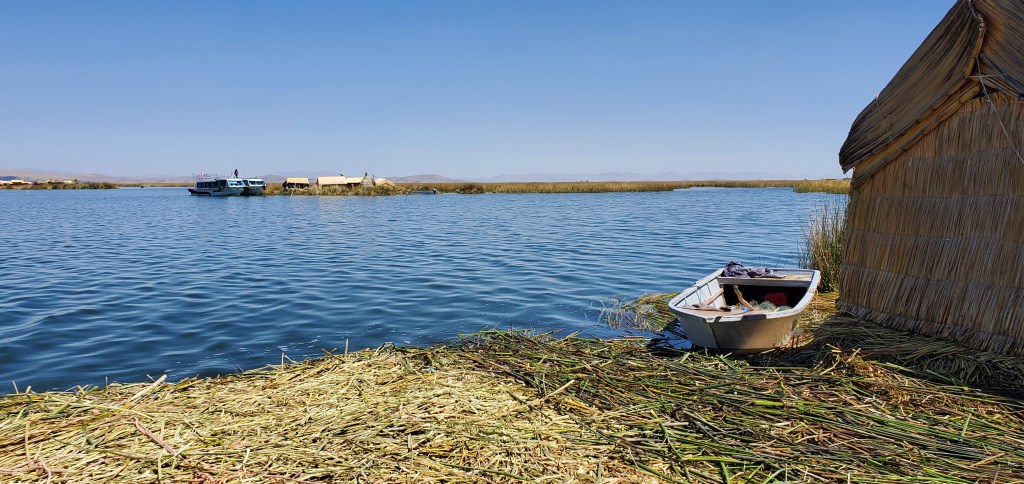
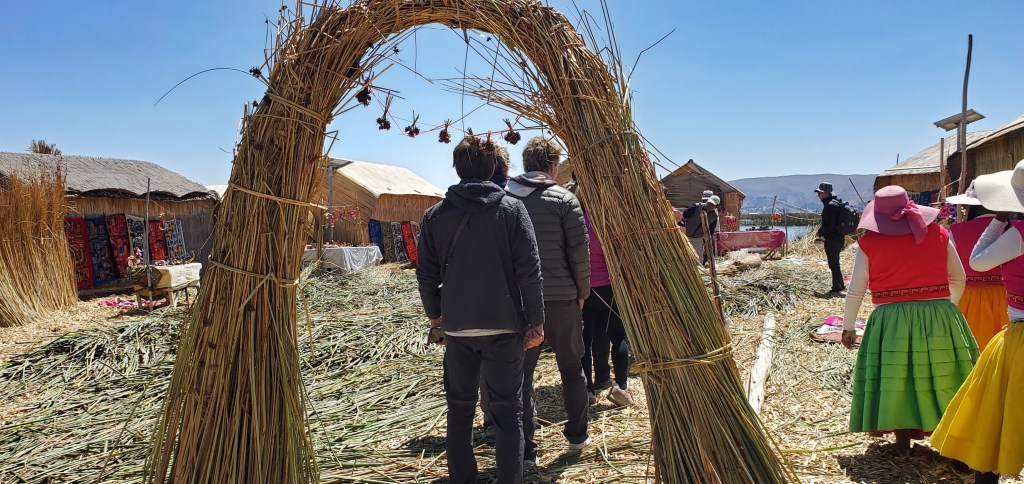
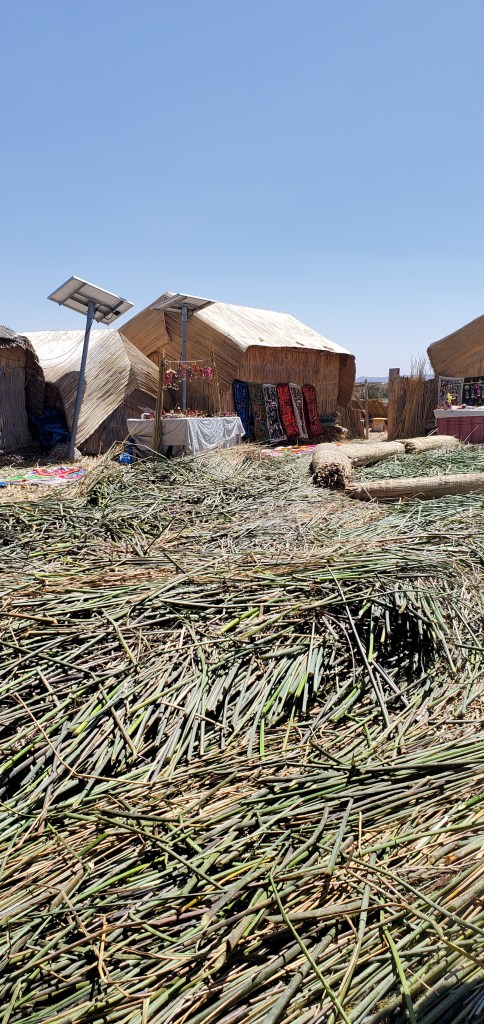
The ground was soft and a little wobbly. There are huts made out of reeds that families live in. They sleep on the ground. They have solar panels for electricity and live very simply.
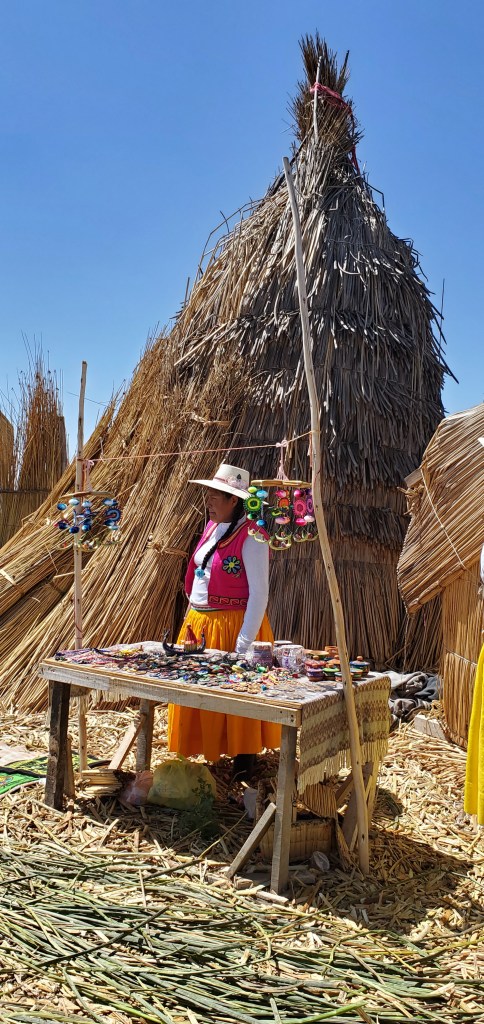
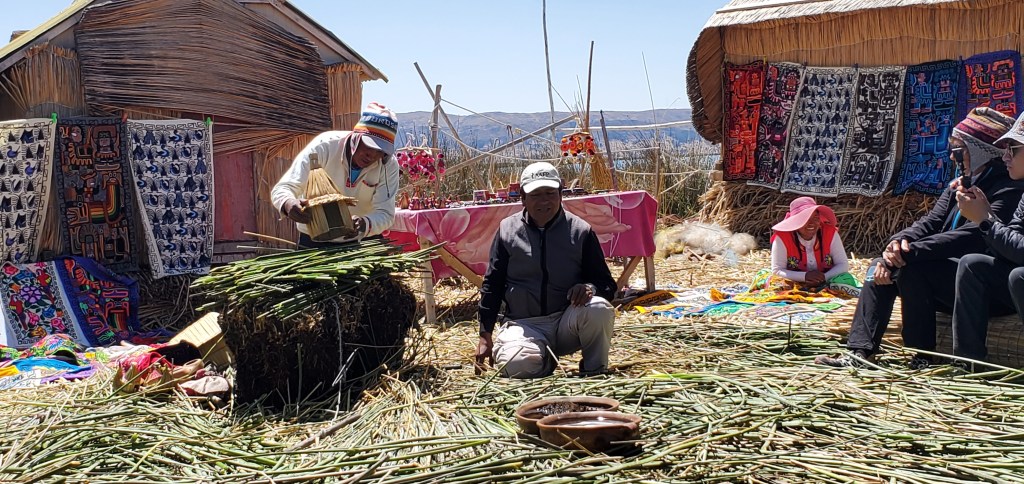
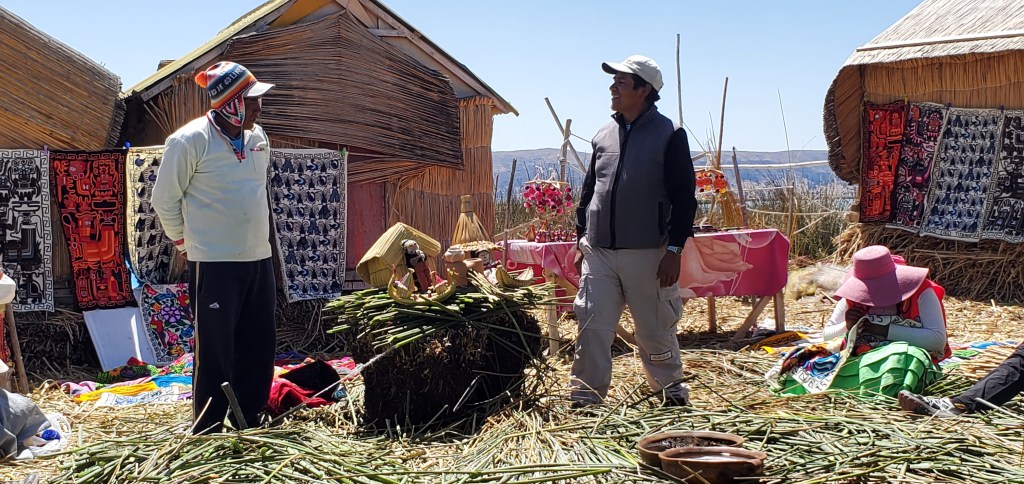
Much of their livelihood is made by selling their wares and hosting tours. They live off the sea and the reeds that grow in the Lake as well as supplies brought in from Puno.

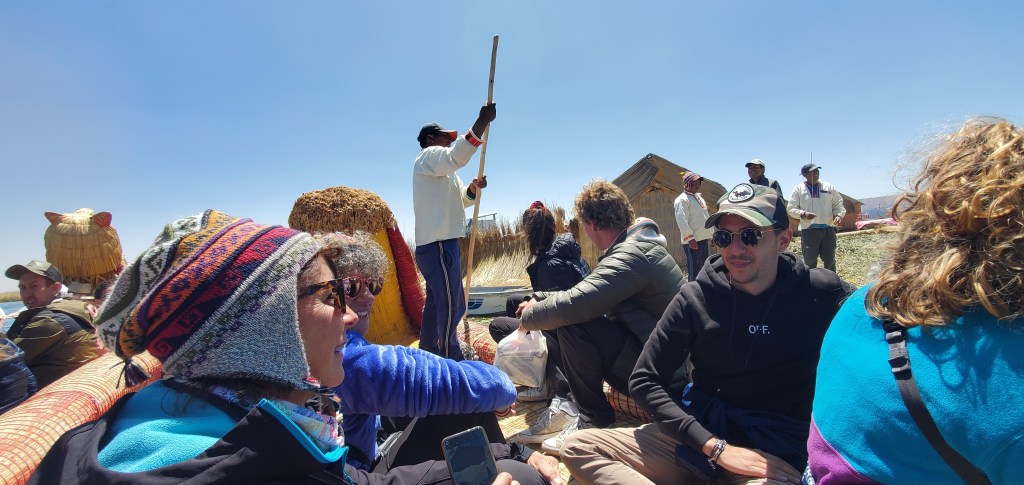
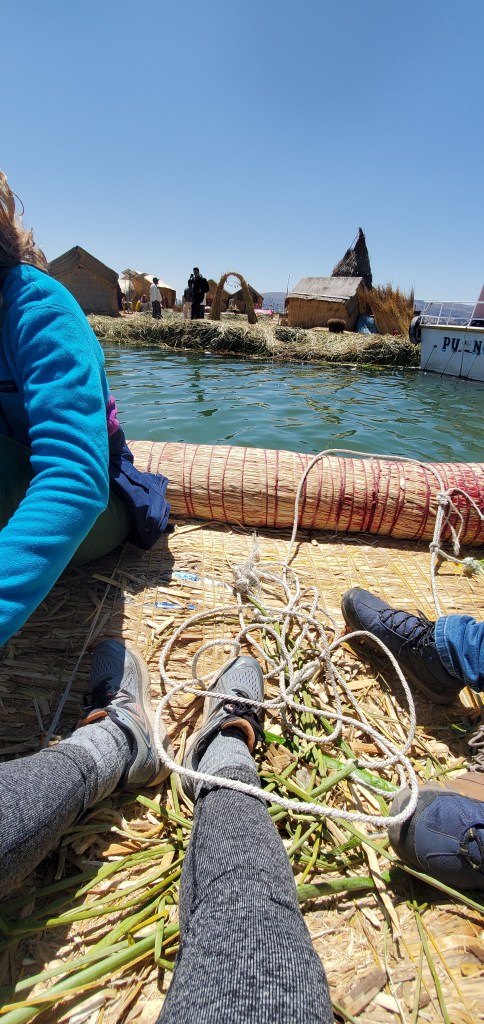
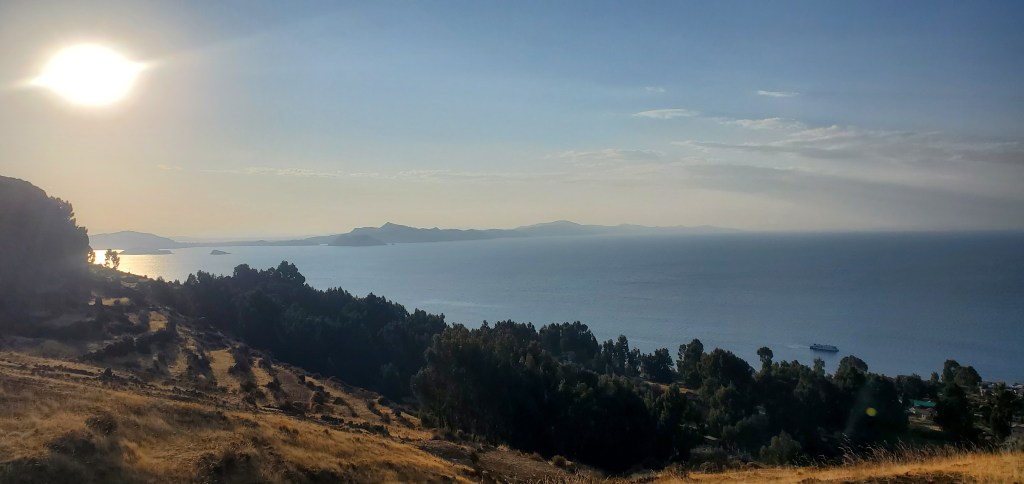
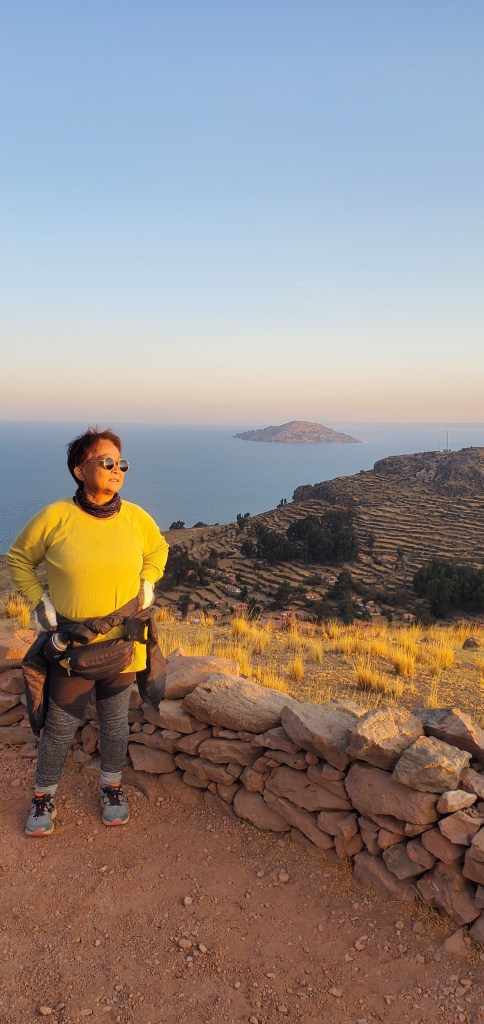
We also visited the islands of Taquile and Amantani. Both are mountain islands and we trekked up each one.
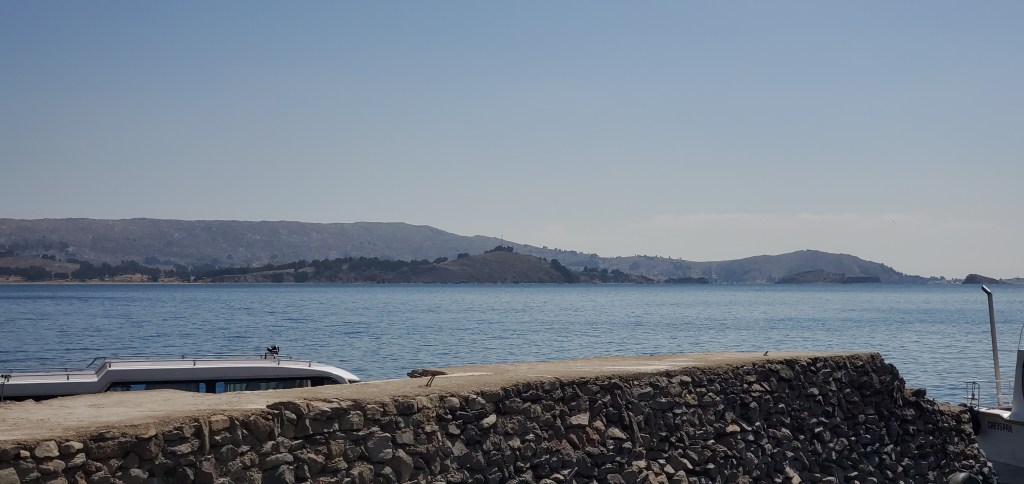
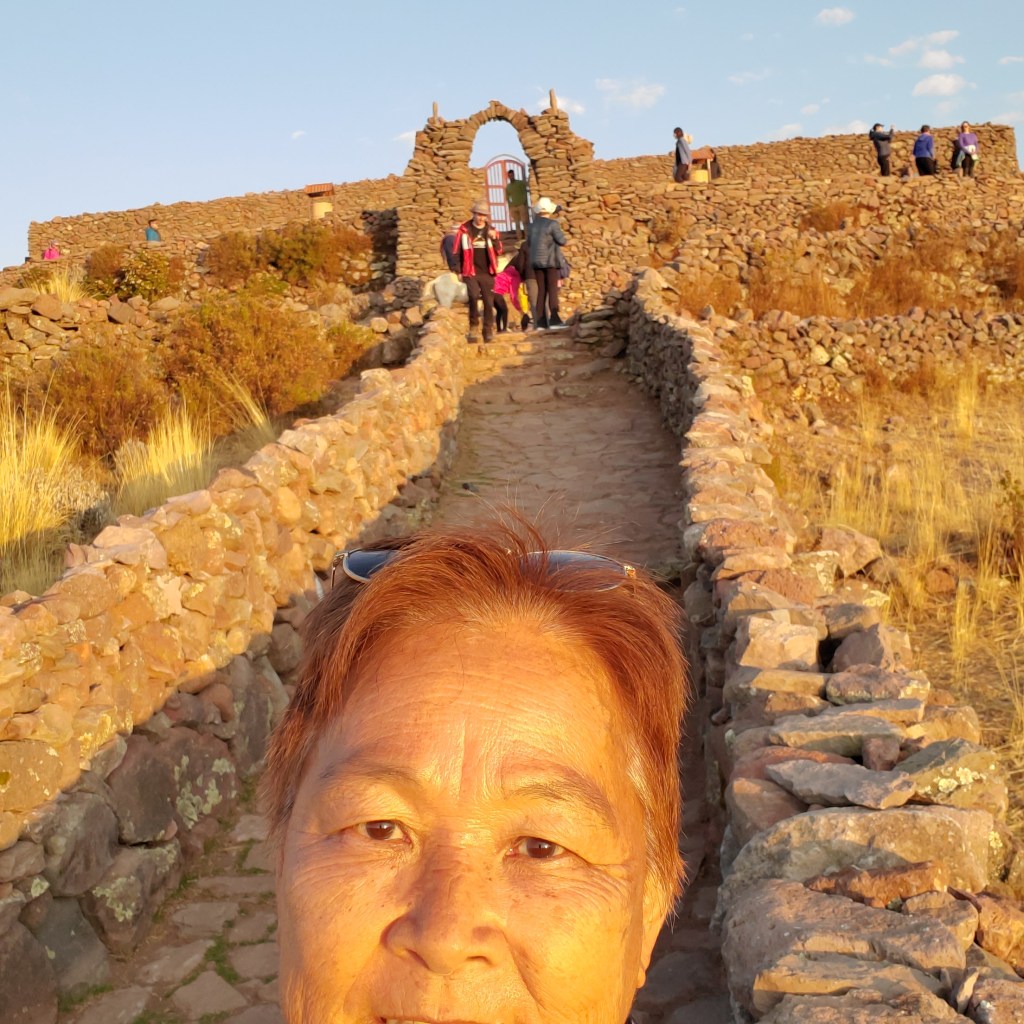
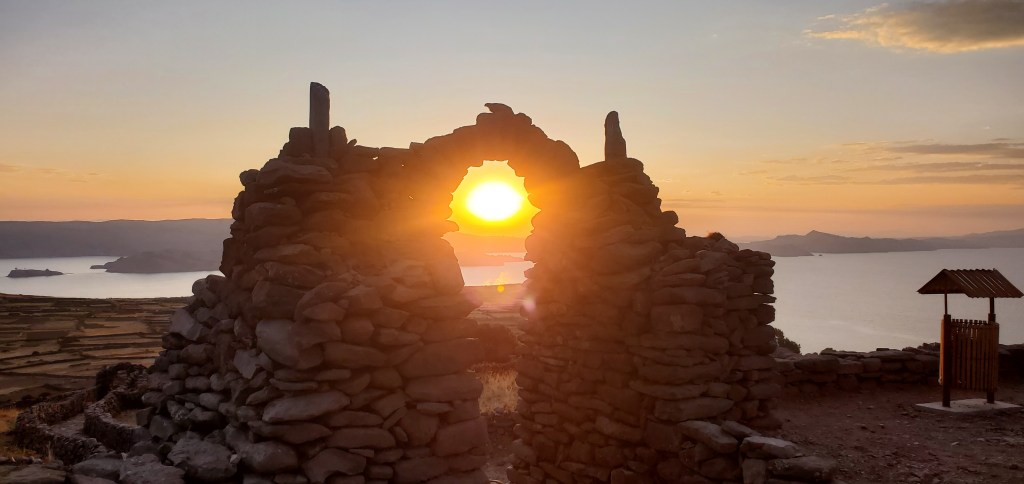
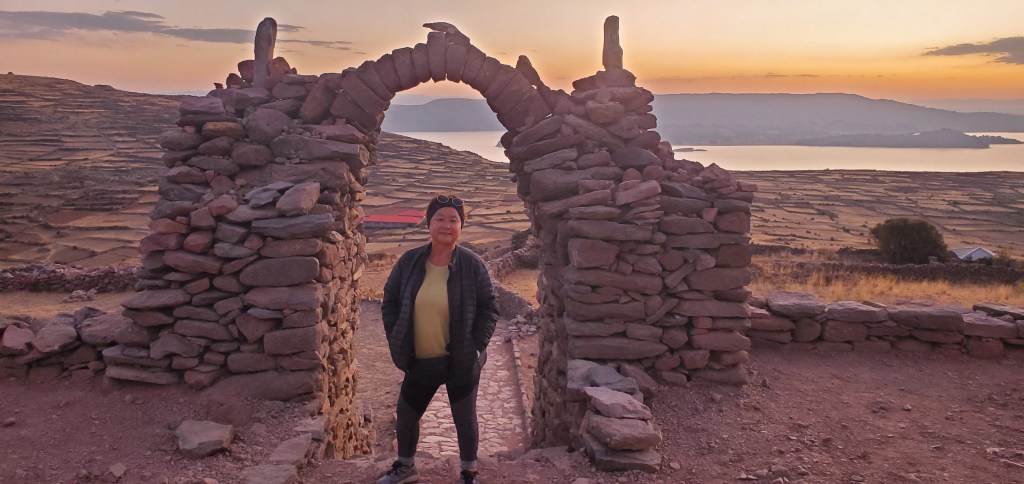
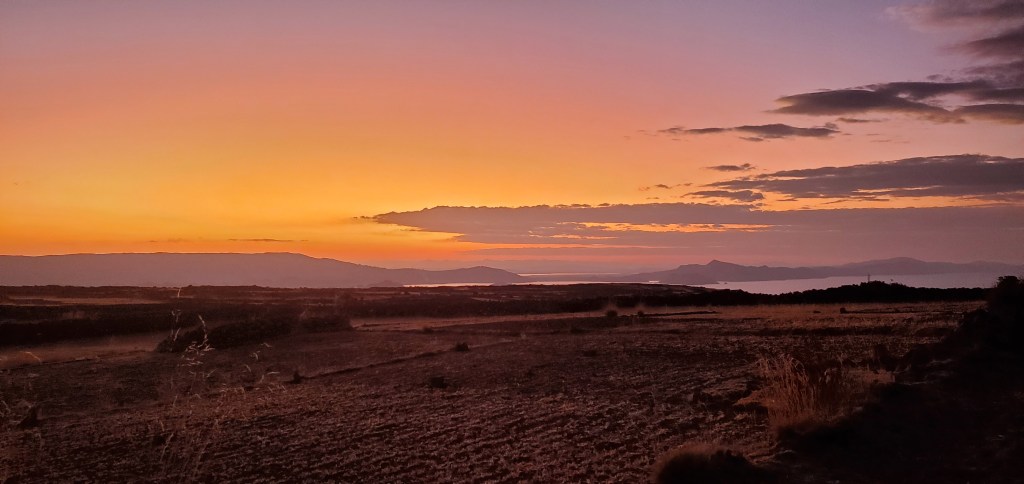
We hiked up to the temple and watched the sunset.

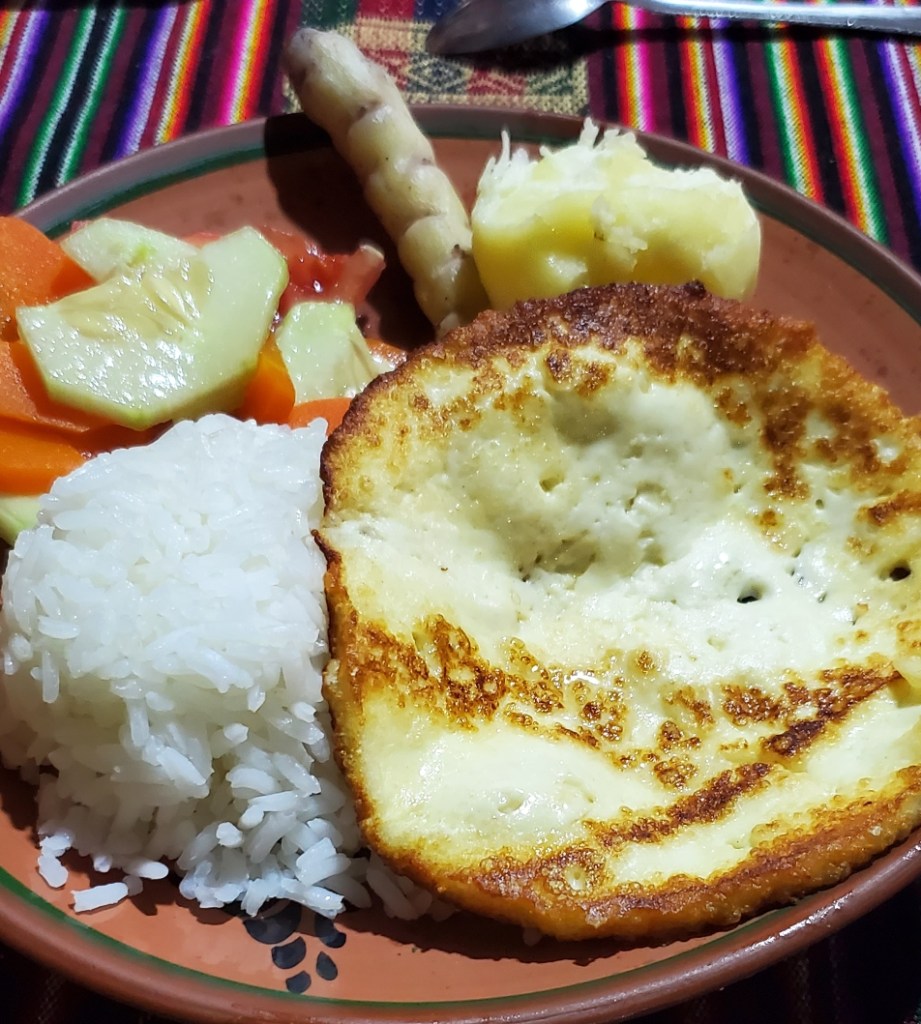
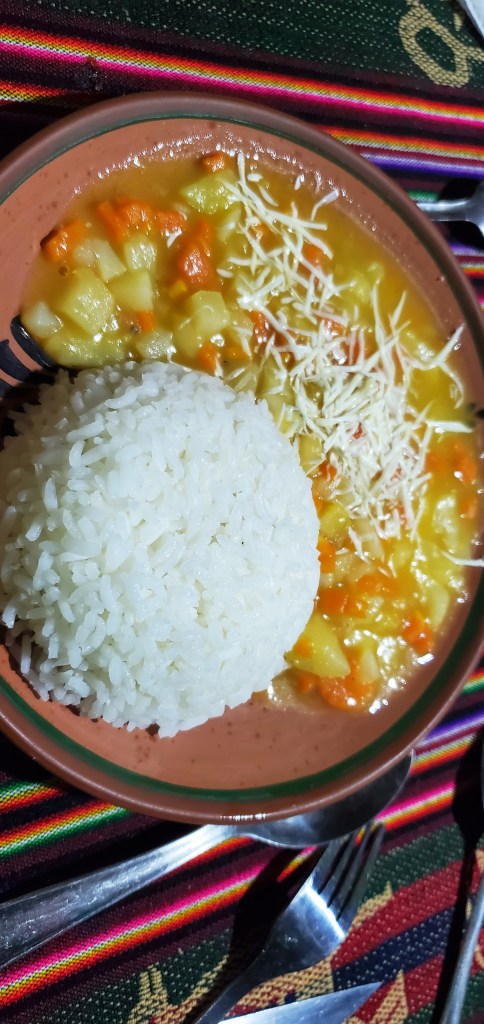
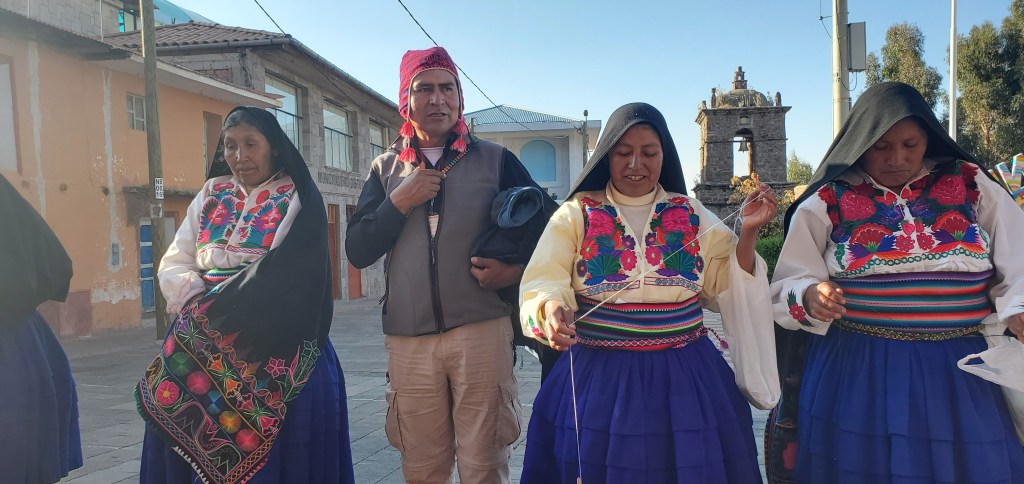
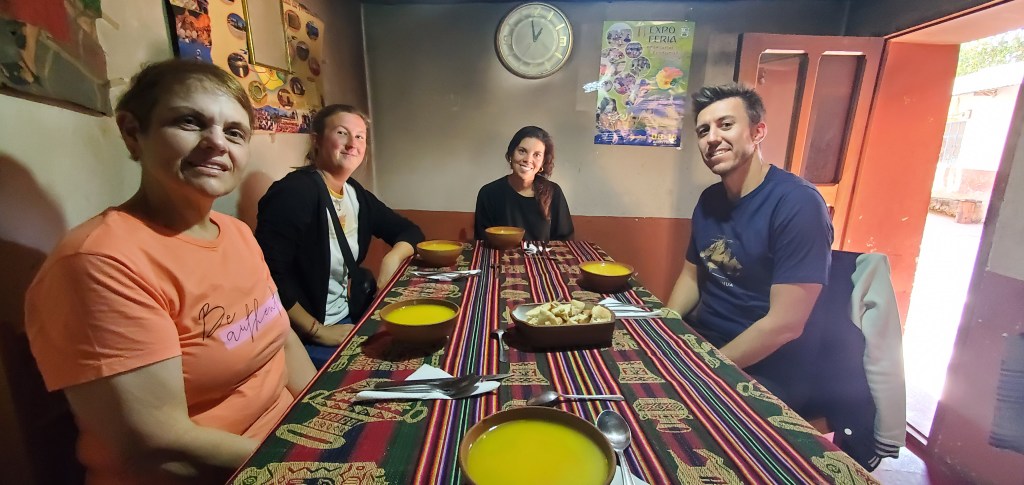
On Taquile we had a homestay for one night. mama fed us mostly quinoa soup and carrots, potatoes, rice and cheese. Very simple food, but sufficient. After dinner we went to a party. Mama surprised us by dressing us in traditional wear. We looked a little strange.
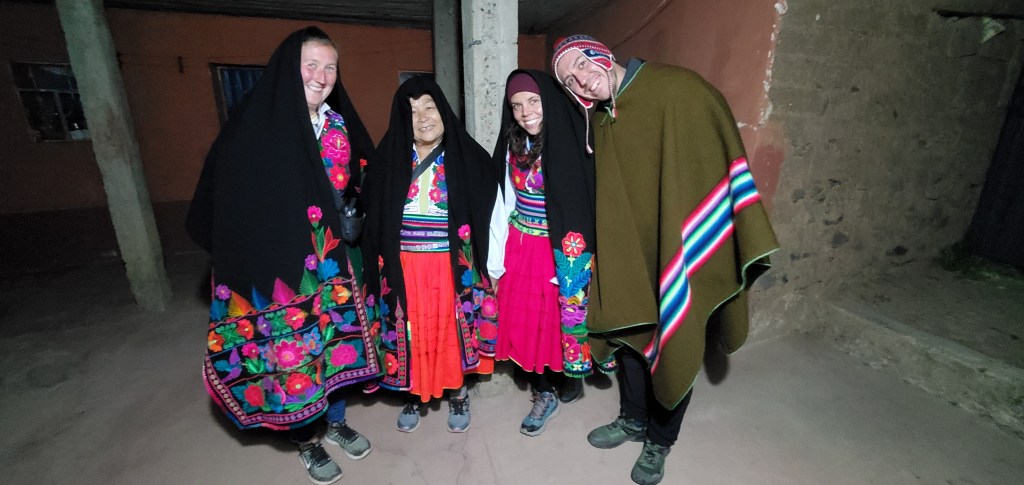
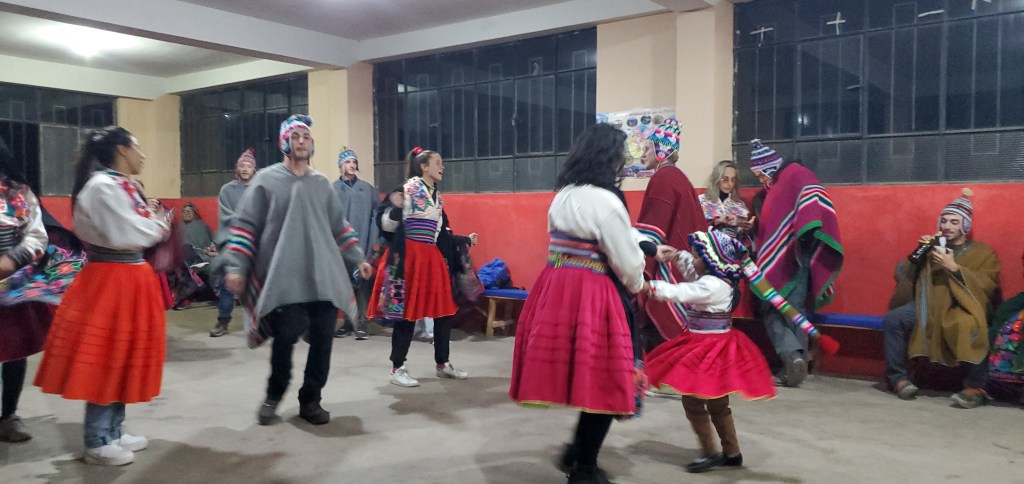
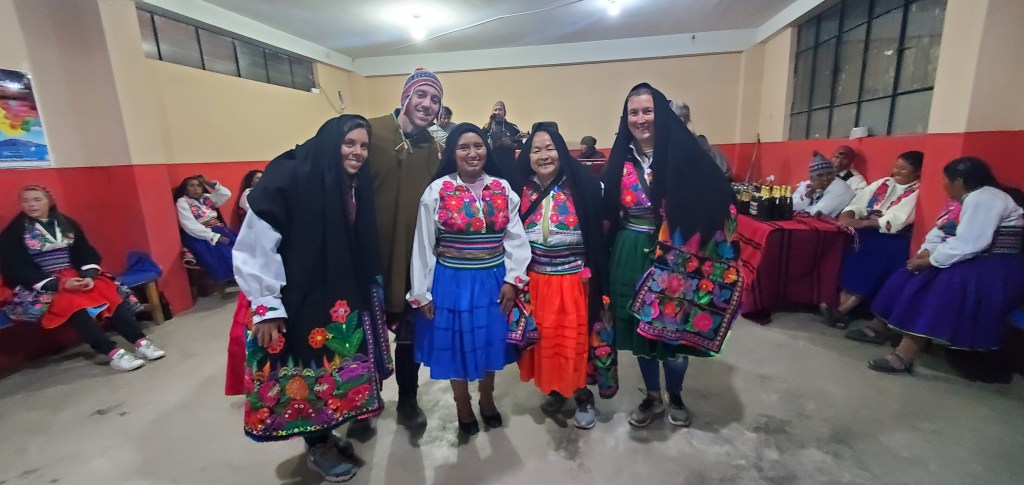
Then the party was over and trekking back to sleep for an early morning boat ride to Amantani.
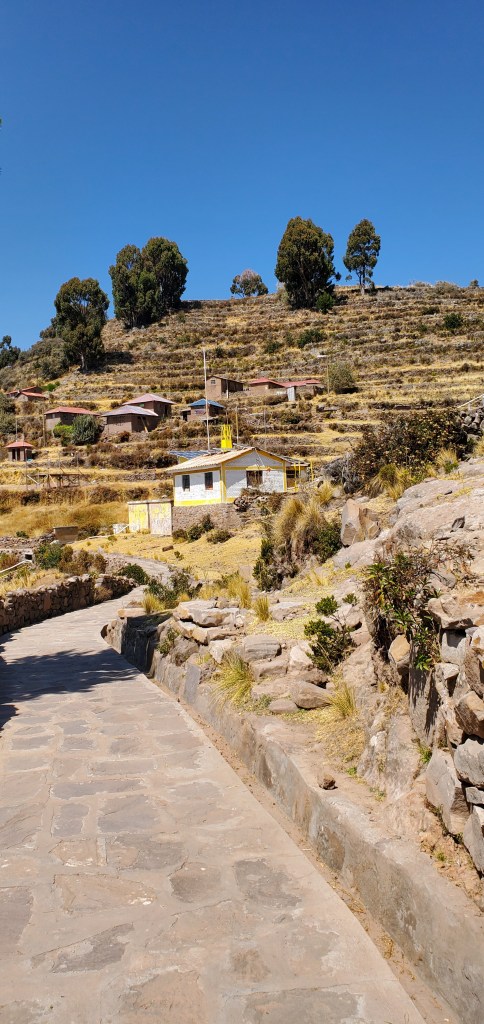
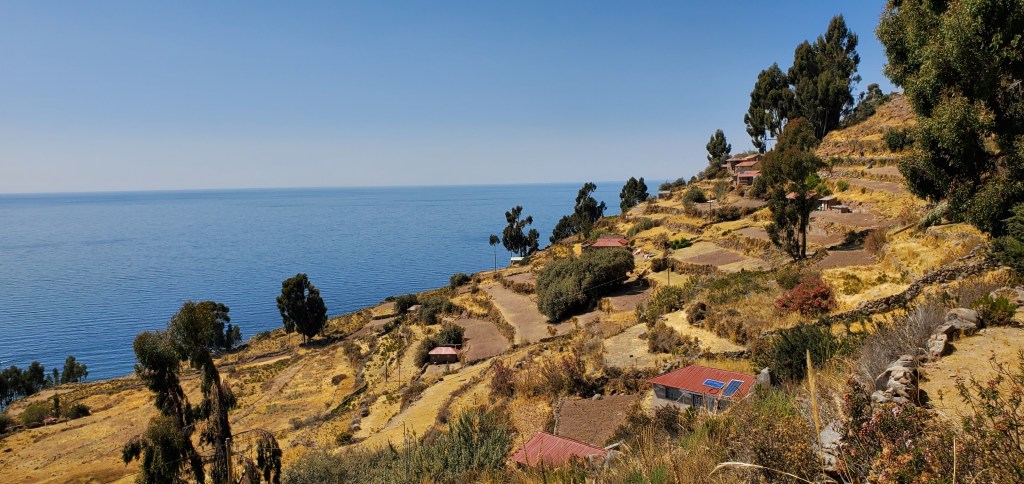
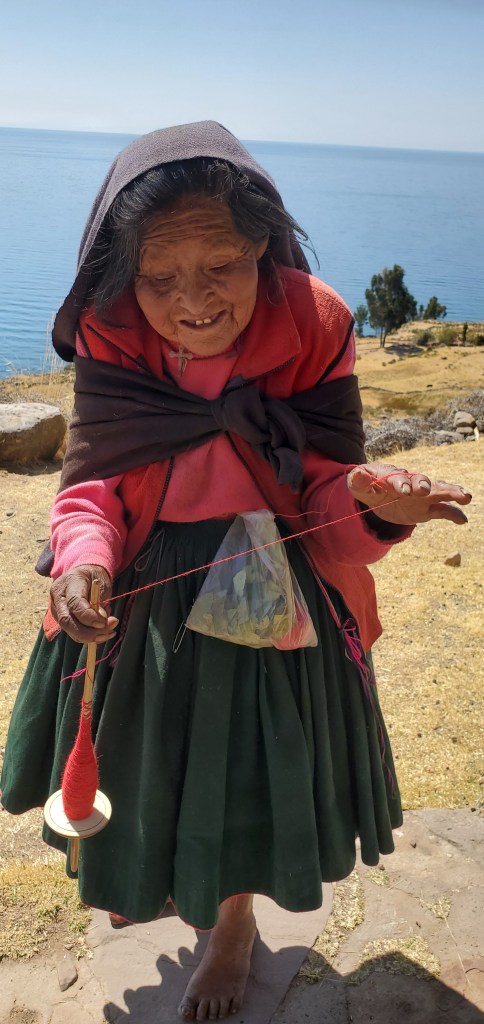
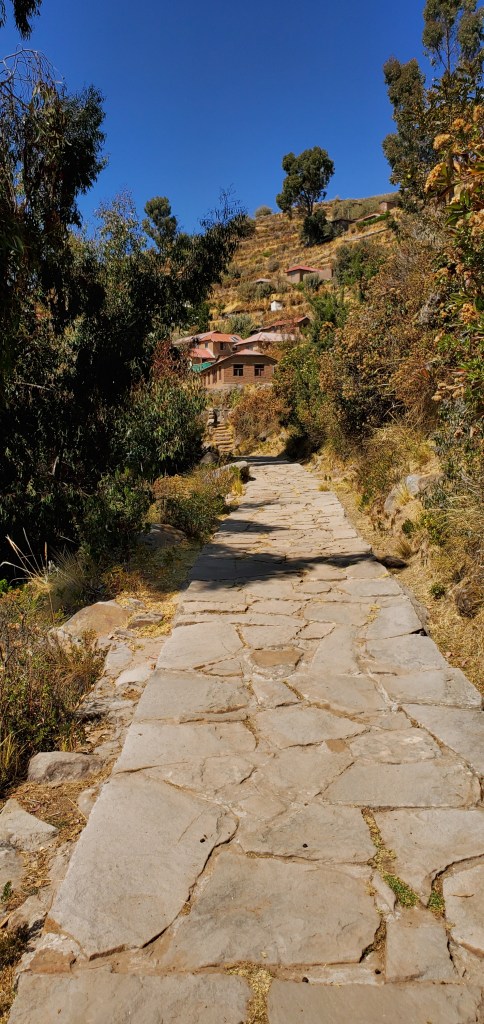
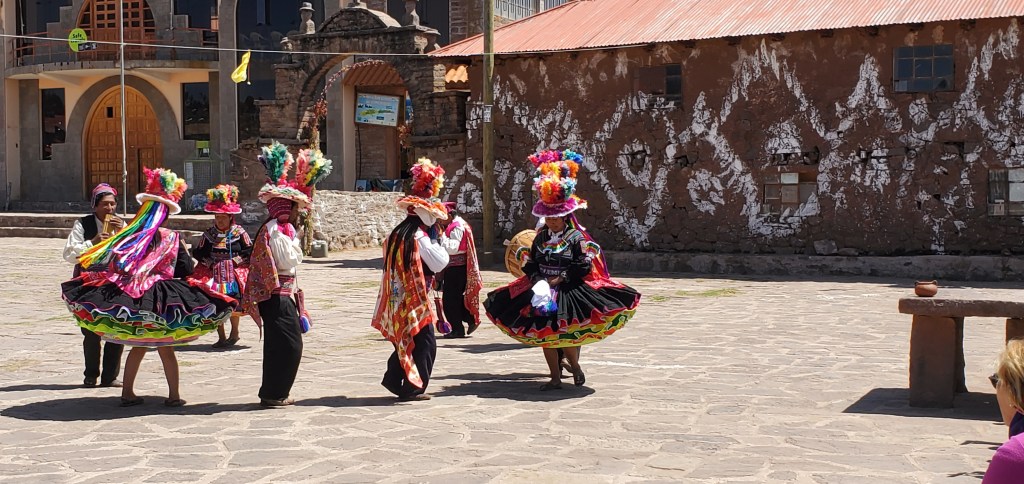
Arrival on Amantani meant another hilly trek to the plaza. We got our passport stamped then watched traditional dancing.
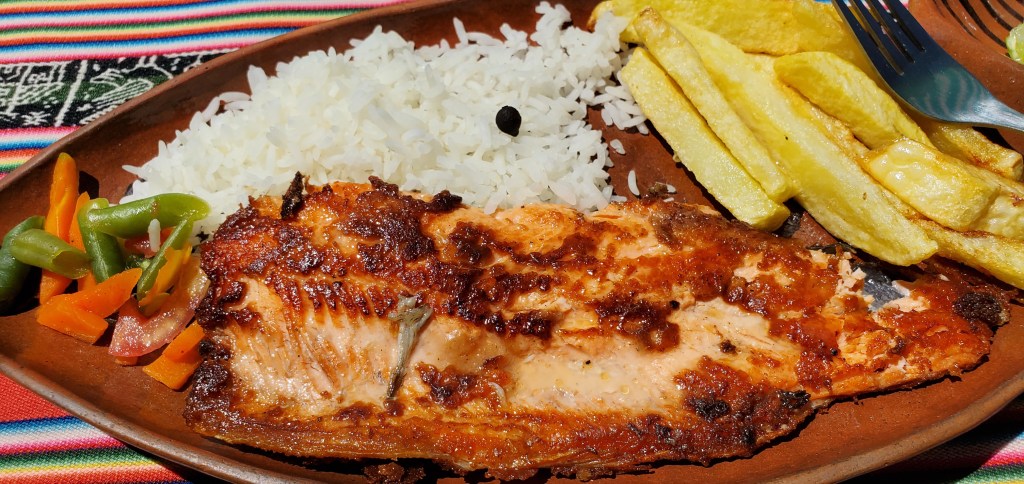
For lunch we had fried trout, rice and vegetables. The trout was good.
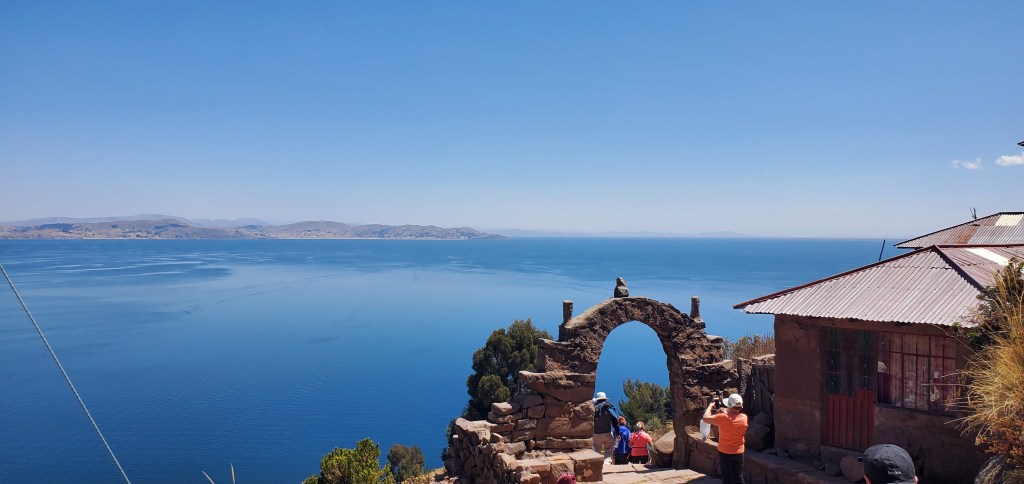
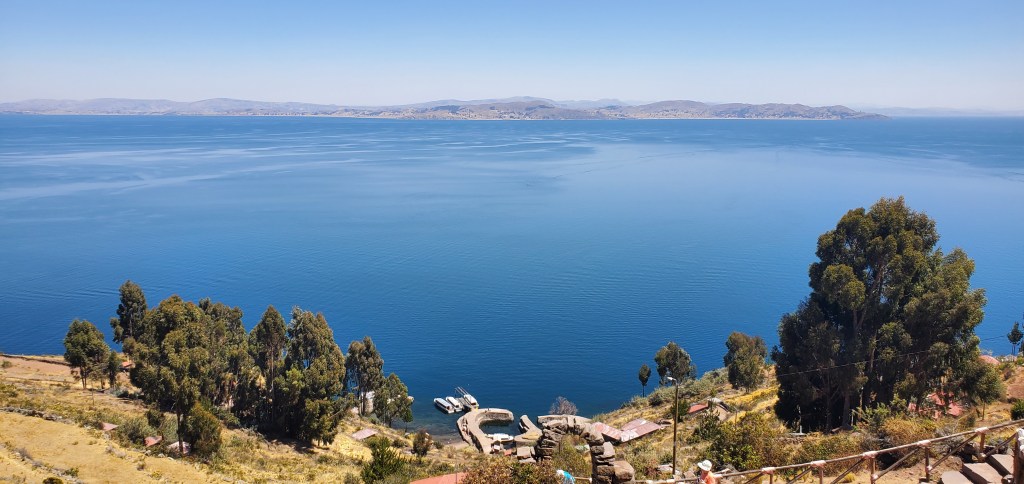
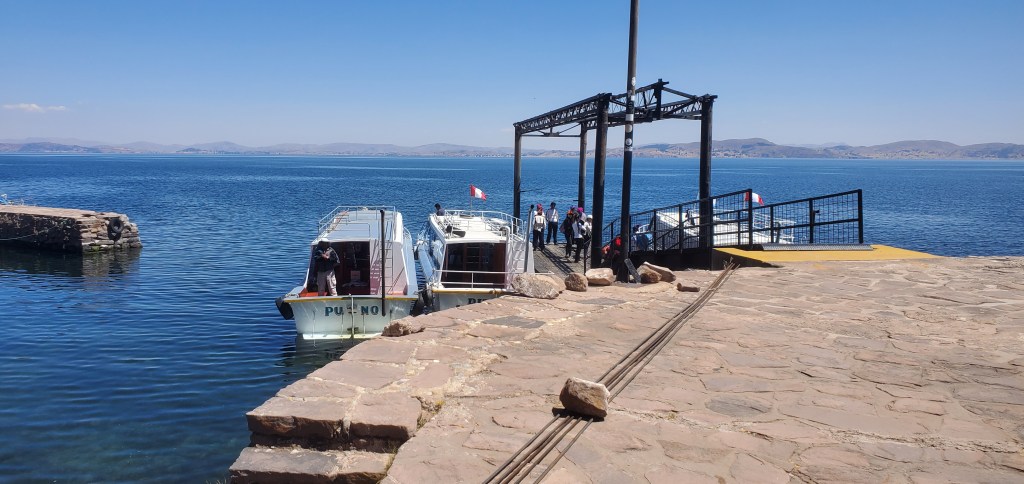
Then back on the boat to Puno. Lake Titicaca is huge. Covering 8300 square km, lake Titicaca is the highest navigable body of water in the world. There are many stories of the lake, including the story of the lost city deep in the waters.
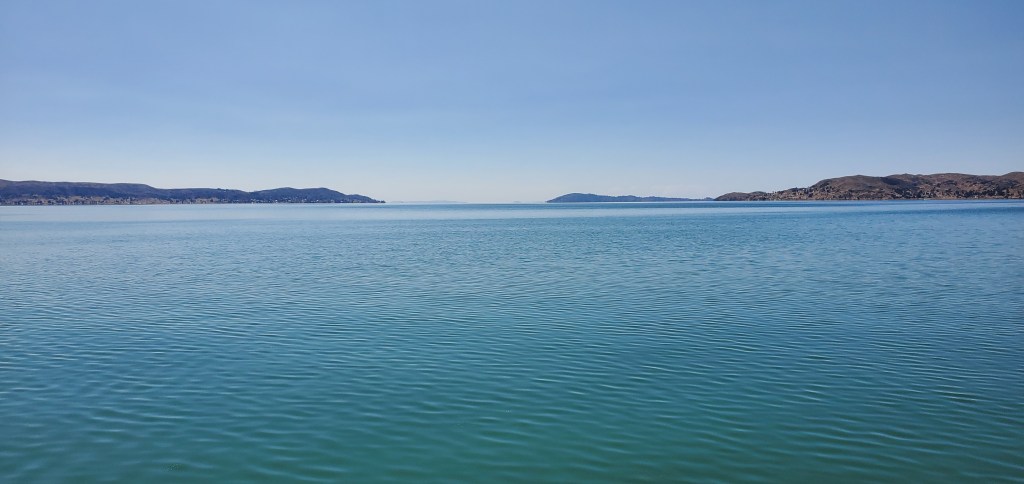
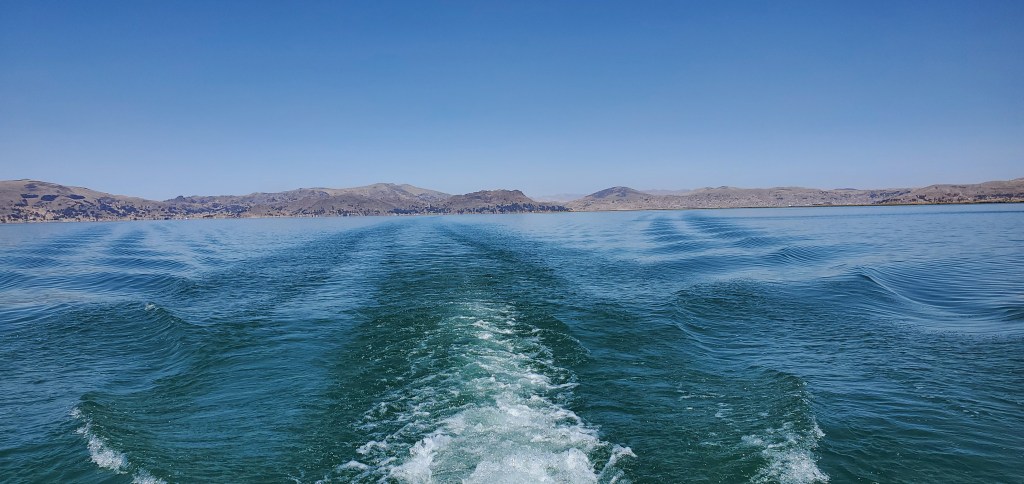
All said and done… Lake Titicaca is a memorable place and it’s people are genuinely living life at its simplest.
 Dream, Create, Inspire